Max Coleman, Royal Botanic Garden Edinburgh and Chair of Edinburgh Biodiversity Partnership
This opening blog for the Edinburgh Biodiversity Partnership is a call to action to grab a camera and get outside looking at nature. Now that so many of us have a decent camera on our phones we can now snap away on the spur of the moment. How often have we all said the words “I wish I had a camera”? Well now most of us do.
Every time I manage to get outside with a camera, I get a thrill out of watching nature. Sometimes I’m even happy with the pictures too. Whatever way you look at this pastime it is a winning formula. Contact with nature is good for our mental health and getting outside and moving is good for the body. The other thing I love about this kind of nature watching is that you will inevitably begin to learn about the natural world and become more observant.
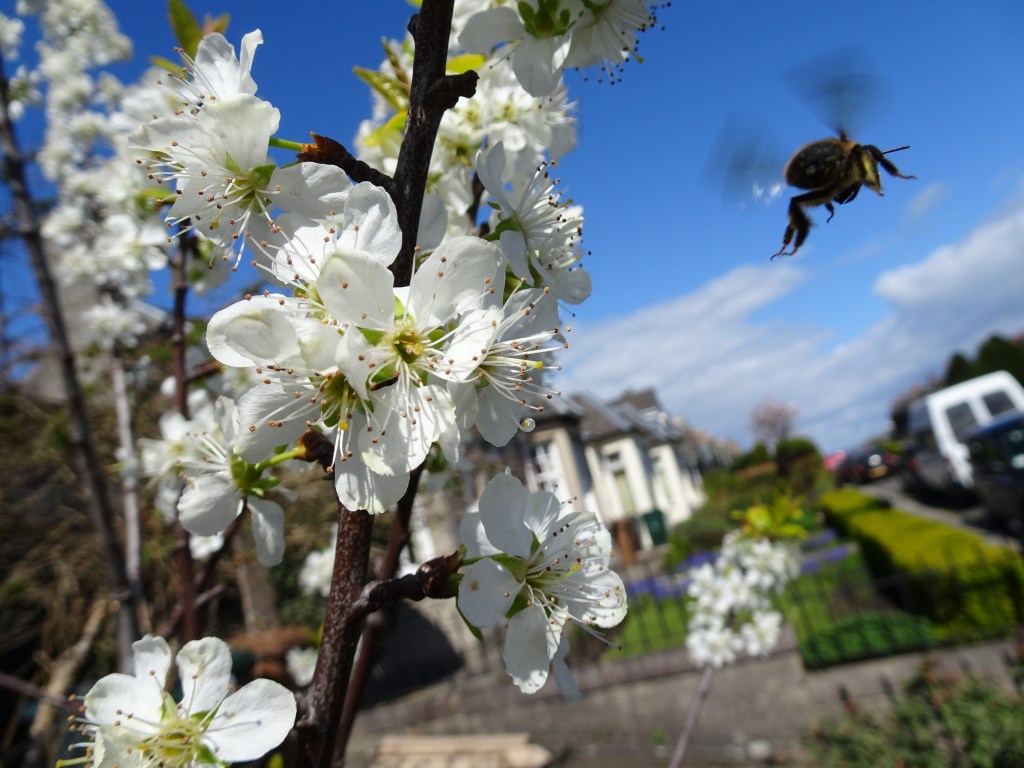
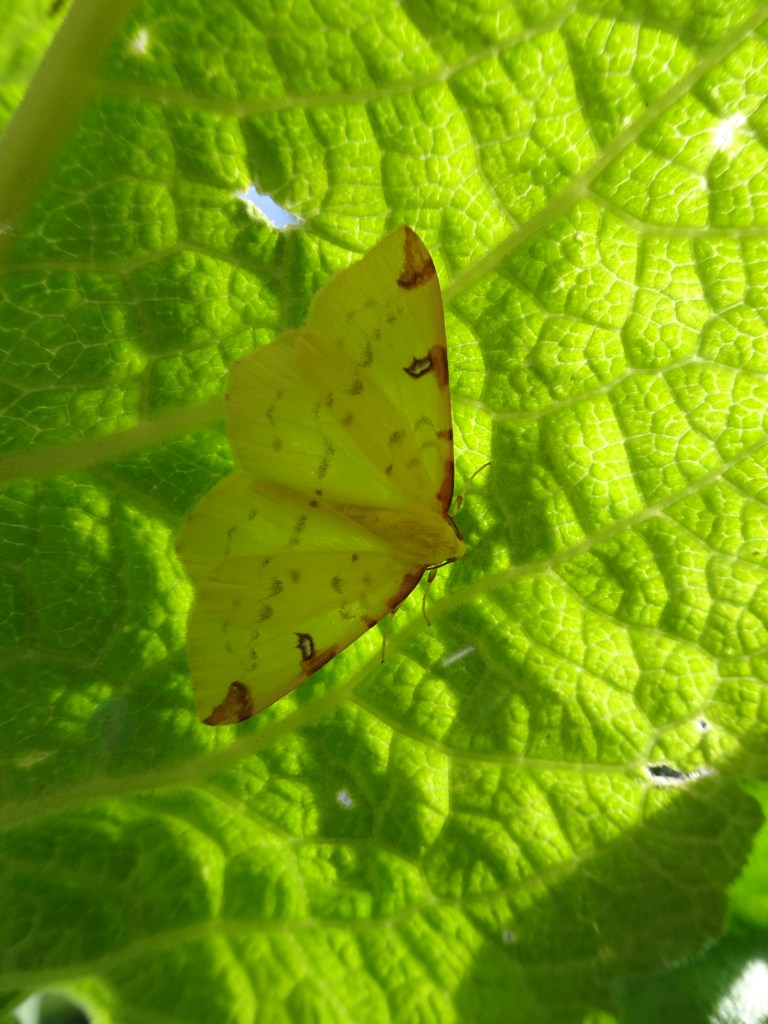
For me, the joy is in experiencing wildlife that is just that bit too small and too active to be fully appreciated by simple observation. It’s true that watching an animal gives you clues to what it is doing and why, but when the animal is smaller than your little fingernail even having exceptionally good eyesight is not enough. The beauty of a photograph is that you get the chance to see the fine detail of, for example, the veins in the wing of an insect that would otherwise go unseen.
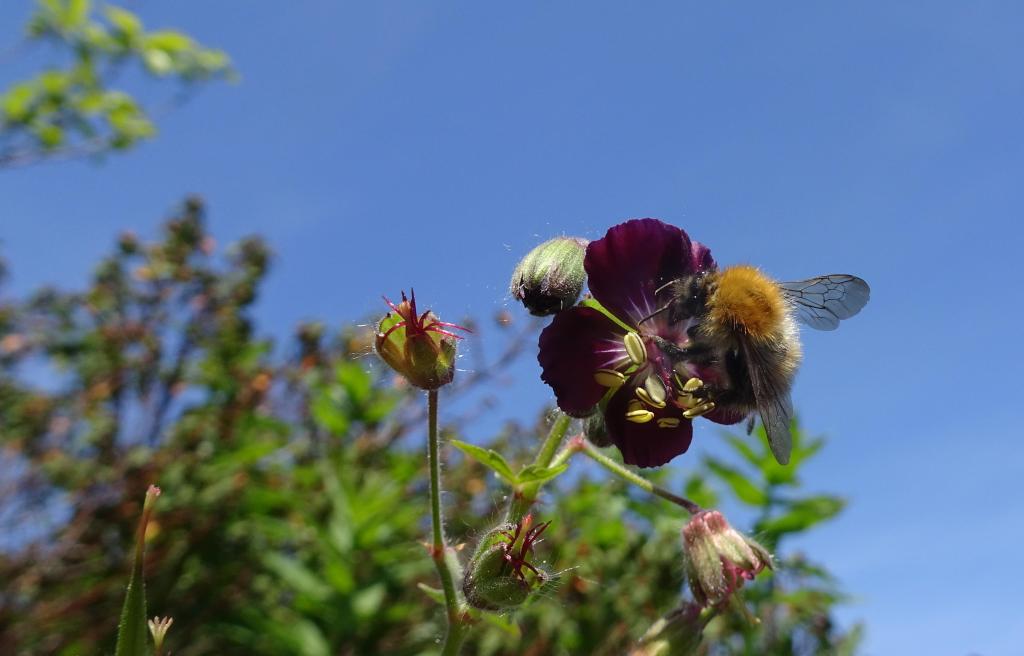
On the first of June, on what was probably the warmest day of the year in Edinburgh so far, I went outside to look for insects. Due to the lovely weather, there were lots of active bees visiting flowers. My experience of photographing bees is that it is very hit and miss. The trick is to just snap away and accept that most of the pictures will be deleted. One great advantage of digital photography is that you can be extravagant in shooting. After several fails, I managed to shoot this image of a common carder bee visiting the flower of a dusky crane’s-bill. The sharpness and composition are purely luck, you don’t have time to think about composing the picture. Just shoot away and hopefully something will please you.
Once you have got that great image you, or someone else, will be able to identify what you have shot. In the process you will build your knowledge of the wildlife you share your neighbourhood with. This is the key to getting beyond the wonders that wildlife films serve up from the other side of the planet, to appreciating the nature under your nose for what it truly is – wonderful.
Here is a useful guide to common bees:
If you want to share your best images, we’d love to see them. Use #EdinWildlife to link to our Twitter, Facebook and Instagram.
 Edinburgh Biodiversity Partnership